


The Timeless Charm of the Welsh Spinning Stool: Stories in Every Carved Seat
At Harbourside Gallery, we believe every antique and curiosity has a story worth telling—and few pieces capture the heart of traditional craftsmanship quite like the Welsh spinning stool (also known as a Welsh spinning chair). These humble yet beautifully characterful pieces of vernacular furniture are more than just seating; they are tangible links to Wales’ rural heritage, domestic industry, and the skilled hands of village craftsmen.
Whether you’re a collector of folk art, a fiber artist seeking an authentic spinning companion, or simply someone who appreciates objects with soul, these chairs embody the gallery’s tagline: Every piece has a story, worth telling, worth enjoying.
What Is a Welsh Spinning Stool?
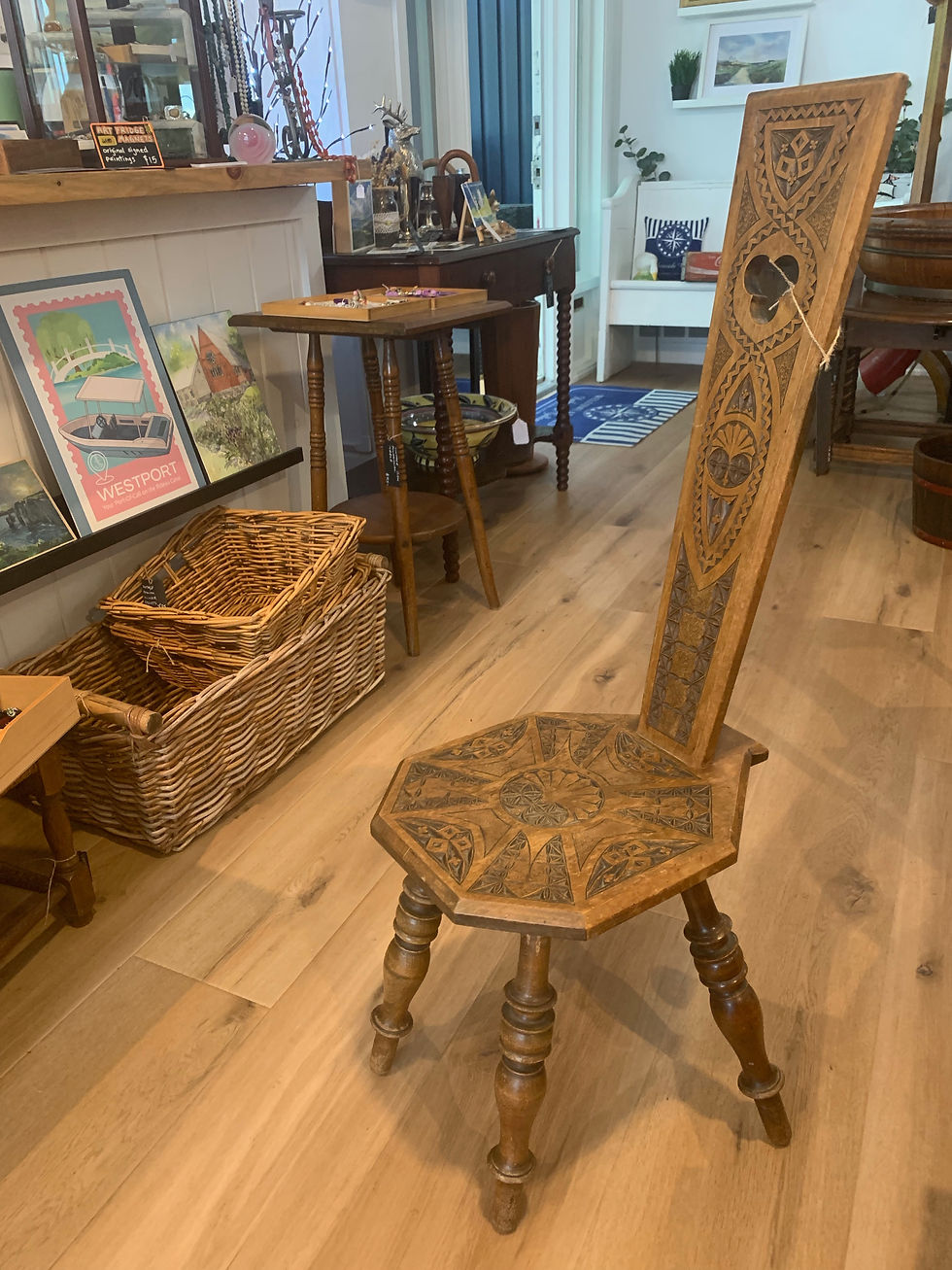
A Welsh spinning stool is a low-seated chair or back-stool specifically designed for comfort during the laborious but rhythmic task of spinning yarn or thread on a traditional spinning wheel.
Typical features include:
A low seat height (often 17–37 cm or roughly 7–14.5 inches) that positions the user perfectly for treadling or hand-spinning.
A short to medium-height backrest—frequently a single carved splat or several “sticks”—providing lower-back support without restricting arm movement.
Turned or splayed legs (usually three or four) for stability on uneven cottage floors.
Rich woods such as oak (often dark-stained), ash, elm, or mixed local timbers.
Hand-carved details: floral motifs, geometric chip carving, hearts, or symbolic elements like the Welsh Red Dragon.
Many examples show the influence of the Arts & Crafts movement or pure folk art, with owners or makers adding personal touches through poker work or intricate chip carving. They belong to the wider family of Welsh stick chairs, known for their simple “staked” construction: legs and back sticks are socketed and wedged into a solid wooden seat for remarkable strength and longevity.
A Deep History: Who Made Them and Why?
The roots of these chairs stretch back centuries within Wales’ vibrant woodworking tradition. Village carpenters, wheelwrights (who also built the spinning wheels themselves), coffin-makers, and versatile local craftsmen created them—not in factories, but in small workshops or even homes. Every community had the skills needed for carts, boats, houses, and household goods.
They were primarily used by women managing household textile production in pre-industrial and early industrial rural Wales. Spinning wool, flax, or other fibers was essential for making clothing and linens. The low, supportive design allowed hours of comfortable work by the hearth, near a window for natural light, or outdoors.
Surviving examples mostly date from the 18th to early 20th centuries, with many fine Victorian and Edwardian pieces (c. 1850–1910) still found today. References to similar stick-back seating appear as early as 12th-century Welsh manuscripts, showing the enduring practicality of this construction method.
One charming museum example at St Fagans (Museum Wales) was chip-carved around 1905 by Amy Rees in Swansea—her father laid out the pattern, and she added the detailed work after attending carving classes. Such personal touches turn functional objects into family heirlooms.
Design That Tells a Story
No two Welsh spinning stools are identical. Makers worked with locally available woods and adapted to the needs of their customers. Ash was prized for its strength in legs and uprights; elm for durable seats; oak for its rich colour and presence. Original paint or multiple layers of finish often survive, adding depth and patina.
Carvings frequently include:
Floral and geometric patterns.
Hearts or lucky symbols.
The Welsh dragon, evoking national pride and folklore.
These details reflect both utility and a quiet celebration of craft. The chairs were built to last on damp flagstone floors, moved easily around the home, and withstand generations of use.
Why They Endure Today
In our modern world of mass-produced furniture, Welsh spinning stools stand out for their sculptural beauty, authenticity, and connection to a slower, more self-sufficient way of life. Collectors prize them for:
Decorative appeal — They add warmth, character, and a sense of history to any interior, from cozy cottages to contemporary spaces.
Functional use — Modern hand-spinners still seek them out for their ergonomic design.
Cultural significance — They represent Welsh identity, folk art, and the ingenuity of ordinary people.
At Harbourside Gallery, nestled by the historic Westport harbour, these pieces fit perfectly alongside our antiques, Art Deco curiosities, vintage art glass, and local artist exhibitions. They remind us that the best objects carry narratives—of labour, family, community, and resilience.
Discover Yours at Harbourside Gallery
Whether you’re drawn to the intricate carvings, the sturdy oak construction, or the romantic history of fireside spinning, a Welsh spinning stool makes a wonderful addition to any collection. We occasionally source these treasures and love helping customers find pieces that speak to them.
Visit us at 41B Main Street, Unit #9, Westport, ON (open Wednesday to Sunday, 10 AM – 5 PM) or browse online at harboursidegallery.com. Our knowledgeable team— including artist and curator Susan Peters—can share more stories and help you find the perfect antique with a tale to tell.
Every piece has a story… What will yours be?
Have questions about Welsh spinning stools, restoration tips, or other antiques? Drop us a line at info@harboursidegallery.com or call 705-500-3088. We’re always happy to chat about the fascinating world of vernacular furniture.


Comments